
Geopolitics, National Security

Undersea Cables: Why They Matter for India’s National Security

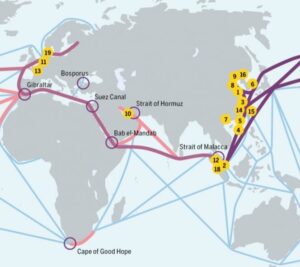
Every day, billions of digital transactions, financial transfers, emails, video calls and cloud services depend on a network that most people never see—undersea fibre-optic cables. Although satellites play an important role in global communications, the vast majority of international internet traffic travels through these submarine cables laid across the ocean floor. For India, whose economy,

Current Affairs, Geopolitics

PM Modi’s Indonesia Visit: Why It Matters for India’s Indo-Pacific Strategy

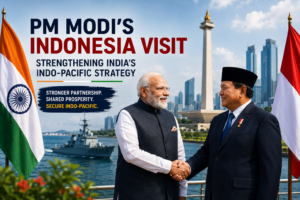
Prime Minister Narendra Modi has begun a three-nation diplomatic tour with a high-profile visit to Indonesia, marking his first bilateral visit since India and Indonesia elevated ties to a Comprehensive Strategic Partnership in 2018. The visit is expected to deepen cooperation in defence, maritime security, critical minerals, digital connectivity and food security. As two major

Current Affairs, Geopolitics

G7 Summit 2026: What It Means for India’s Global Strategy

The G7 Summit 2026 in Evian, France, comes at a time of significant geopolitical change. Although India is not a member of the G7, Prime Minister Narendra Modi’s participation highlights the country’s growing importance in global affairs. As major powers navigate economic uncertainty, technological competition, energy security challenges and regional conflicts, India’s role as a

Geopolitics, National Security

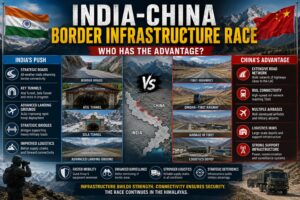
India-China Border Infrastructure Race: Who Has the Advantage?

The India-China border is one of the world’s most strategically sensitive frontiers. Stretching across the Himalayas, the Line of Actual Control (LAC) has become a focal point of military competition and infrastructure development. In recent years, both India and China have accelerated the construction of roads, tunnels, railways, airfields, and logistics hubs near the border.

Current Affairs, Geopolitics, Strategic Affairs

Why PM Modi’s Slovakia Visit Is More Than Just Diplomacy

Prime Minister Narendra Modi’s visit to Slovakia marks an important moment in India’s engagement with Europe. While larger European powers such as France, Germany, and the United Kingdom often dominate headlines, India’s growing partnership with smaller but strategically positioned European nations is becoming increasingly significant. The visit reflects India’s broader effort to strengthen its diplomatic,

Geopolitics, National Security

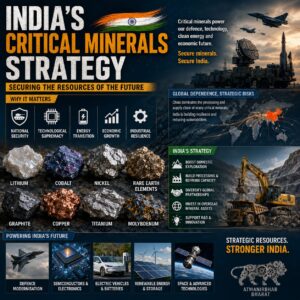
India’s Critical Minerals Strategy: Securing the Resources of the Future

In the 21st century, national power is no longer determined solely by military strength or economic size. Increasingly, countries are competing for access to critical minerals that power modern technologies, defence systems, electric vehicles and advanced industries. From lithium batteries and semiconductor chips to fighter aircraft and missile systems, critical minerals have become the foundation

Geopolitics, National Security

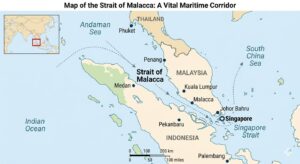
Strait of Malacca: Why It Matters for India’s Security

Introduction The Strait of Malacca is one of the most important maritime chokepoints in the world. Located between the Malay Peninsula and the Indonesian island of Sumatra, it connects the Indian Ocean to the Pacific Ocean. For India, this narrow sea passage plays a crucial role in trade, energy imports and strategic security. What Is

Geopolitics, National Security

India’s Strategic Chokepoints: Why Geography Shapes Power

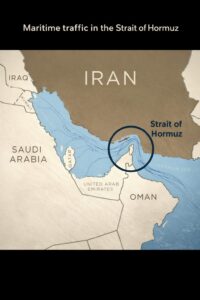
Geography continues to shape global power, even in an age of advanced technology. Certain narrow passages, known as strategic chokepoints, control the movement of trade, energy and military forces. For India, these chokepoints are not distant concepts. They directly influence national security, economic stability and geopolitical strategy. What Are Strategic Chokepoints? Strategic chokepoints are narrow

Scroll to Top