
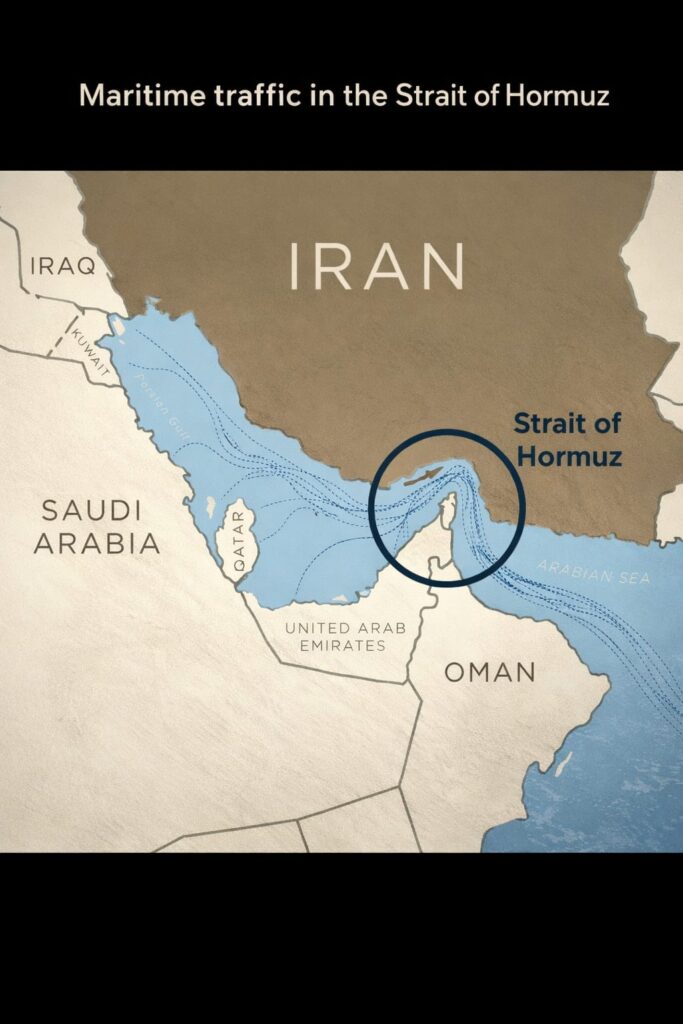
The Strait of Hormuz is one of the most critical maritime chokepoints in the world. It connects the Persian Gulf to the Arabian Sea and carries a large share of global oil shipments.
For India, this narrow waterway is directly linked to energy security, economic stability and strategic planning.
According to global energy data, the Strait of Hormuz handles nearly one-fifth of the world’s oil trade, making it one of the most critical chokepoints in global shipping. (Source: U.S. Energy Information Administration)
What Is the Strait of Hormuz?
The Strait of Hormuz is a narrow sea passage between Iran and Oman.
It is:
- one of the most important oil transit routes globally
- a vital link between energy producers and consumers
- extremely difficult to bypass
Even small disruptions here can impact global markets.
Why It Matters for India
- Energy Lifeline
A significant portion of India’s crude oil imports passes through the Strait of Hormuz.
This makes India vulnerable to:
- supply disruptions
- price shocks
- geopolitical tensions
- Economic Impact
India’s economy depends heavily on stable energy supplies.
Any instability in the strait can lead to:
- rising fuel prices
- inflation
- pressure on economic growth
- Strategic Dependency
The concentration of oil flow through a narrow route creates a strategic vulnerability.
This is why the Strait of Hormuz is often seen as a global pressure point.
Military and Strategic Importance
The region is heavily monitored by naval forces.
Key objectives include:
- securing shipping lanes
- deterring threats
- maintaining freedom of navigation
Any conflict or blockade can quickly escalate into a global crisis.
Risks and Challenges
The Strait of Hormuz faces multiple risks:
- geopolitical tensions in the region
- potential military confrontation
- threats to shipping
Its narrow geography makes it highly sensitive to disruption.
India’s Strategic Response
India has taken several steps to reduce risks:
- diversifying energy sources
- strengthening naval capabilities
- building strategic petroleum reserves
- increasing engagement with regional partners
These efforts aim to reduce dependence on a single route.
Link to Global Chokepoints
The Strait of Hormuz is part of a wider network of strategic chokepoints that control global trade and energy flows.
Understanding this network is essential for analyzing global geopolitics.
Strategic Conclusion
The Strait of Hormuz remains a critical factor in India’s energy security.
Its importance goes beyond geography, influencing economics, diplomacy and national security.
For India, ensuring uninterrupted access to this route is a long-term strategic priority.
Read more: Why the Strait of Malacca and Strait of Hormuz is India’s most important maritime route.