
Geopolitics, National Security

Strait of Malacca: Why It Matters for India’s Security

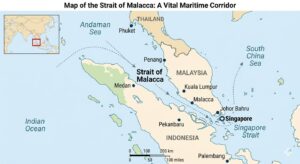
Introduction The Strait of Malacca is one of the most important maritime chokepoints in the world. Located between the Malay Peninsula and the Indonesian island of Sumatra, it connects the Indian Ocean to the Pacific Ocean. For India, this narrow sea passage plays a crucial role in trade, energy imports and strategic security. What Is

Defence, National Security

India–US Defence Deal: Excalibur Artillery Boost

Introduction India has signed a defence deal with the United States to procure Excalibur precision-guided artillery rounds worth approximately ₹300 crore. While the deal may appear small in financial terms, its strategic value is far greater—especially in the context of modern warfare, where precision and speed matter more than volume. India’s defence modernisation is part

Geopolitics, National Security

India’s Strategic Chokepoints: Why Geography Shapes Power

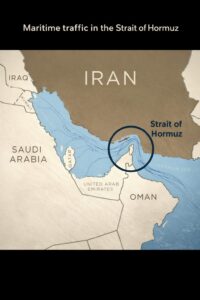
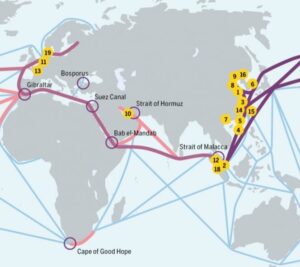
Geography continues to shape global power, even in an age of advanced technology. Certain narrow passages, known as strategic chokepoints, control the movement of trade, energy and military forces. For India, these chokepoints are not distant concepts. They directly influence national security, economic stability and geopolitical strategy. What Are Strategic Chokepoints? Strategic chokepoints are narrow

National Security, Strategic Affairs

Can India Secure the Siliguri Corridor in Wartime?

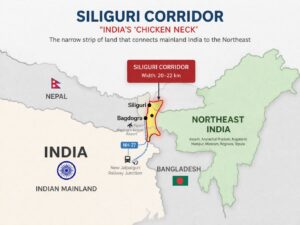
The Siliguri Corridor is one of India’s most strategically sensitive regions. This narrow strip of land connects mainland India to the entire northeastern region, making it a critical lifeline for transport, supply chains and military movement. In peacetime, it functions as a vital logistical artery. In wartime, however, its importance multiplies. The central question is

Defence, National Security

Why Anti-Drone Warfare Is Now Essential for India

Introduction Modern warfare is increasingly shaped by systems that are small, mobile and difficult to detect. Among these, drones have emerged as one of the most disruptive technologies in recent conflicts. Unmanned aerial systems now influence surveillance, reconnaissance, targeting and even direct attacks. Their relatively low cost and growing accessibility have made them important tools

Geopolitics, Strategic Affairs

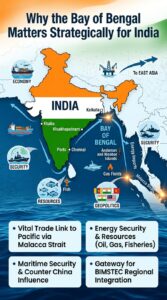
Why the Bay of Bengal Is Becoming Strategically Critical for India

Introduction The Bay of Bengal is no longer only a regional maritime space connecting India to Southeast Asia. It is increasingly becoming one of the most strategically important maritime zones in India’s long-term security environment. As maritime competition expands across the wider Indo-Pacific, the Bay of Bengal now carries growing importance for naval access, trade

National Security, Strategic Affairs

Why India’s Island Territories Matter More Than Ever in Modern Warfare

Introduction In modern strategic planning, geography often determines long-term military advantage before a crisis even begins. For India, this principle is especially important because some of its most valuable strategic assets are not located on the mainland but far into the surrounding ocean. India’s island territories are often discussed in administrative or tourism terms, yet

National Security, Strategic Affairs

India’s Energy Security Beyond West Asia: Long-Term Strategy

Why Energy Security Has Become a Strategic Priority Energy security is now one of the most important pillars of India’s long-term strategic planning. As one of the world’s fastest-growing major economies, India depends heavily on imported crude oil, natural gas and industrial energy inputs to sustain economic growth. Any disruption in global supply routes can

Scroll to Top