
ndia’s investment in Iran’s Chabahar Port is one of the most strategically important yet least understood foreign policy moves made by New Delhi in recent years.
Unlike headline-grabbing defence deals or summit diplomacy, Chabahar represents a quiet, long-term bet on India’s strategic autonomy, regional connectivity, and economic reach.
In February 2026, the Government of India confirmed in Parliament that it has fulfilled its USD 120 million commitment for the procurement of port equipment at Chabahar. This reaffirmed India’s intent to stay invested in the project despite geopolitical pressure and sanctions-related complexities.
What Is Chabahar Port and Where Is It Located?
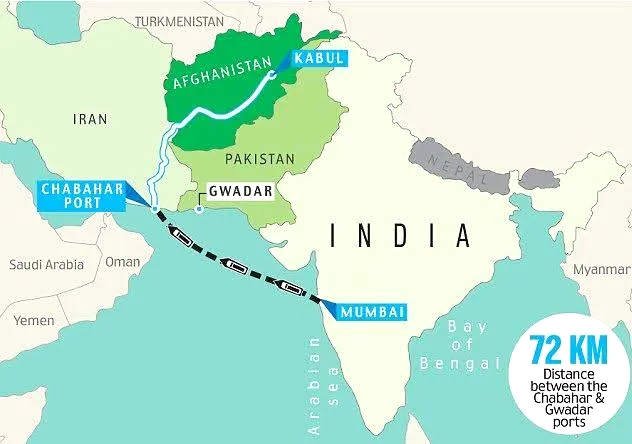
Chabahar Port is located in southeastern Iran, in the Sistan-Baluchestan province, along the Gulf of Oman.
Unlike Iran’s ports in the Persian Gulf, Chabahar has direct access to the Indian Ocean, making it strategically significant.
Key advantages of Chabahar’s location:
- Bypasses the Strait of Hormuz chokepoint
- Offers shorter sea routes for Indian trade
- Serves as a gateway to Afghanistan and Central Asia
For India, geography alone makes Chabahar a rare opportunity.
India’s $120 Million Investment: What Parliament Was Told
In response to a question in Parliament, the Ministry of External Affairs confirmed that:
- India committed USD 120 million for the development and operation of the Shahid Beheshti terminal at Chabahar
- The final tranche was transferred on 26 August 2025
- The funds were used for procurement of port equipment
- The port is operated under an agreement between India Ports Global Limited (IPGL) and Iran’s Ports and Maritime Organisation
This clarification put to rest speculation about whether India was slowing or reconsidering its involvement.
Why Chabahar Is Strategically Critical for India
1. Bypassing Pakistan Completely
Pakistan has consistently denied India overland access to Afghanistan and Central Asia.
Chabahar allows India to completely bypass Pakistan and still reach these regions through Iran.
This is not symbolic. It is operational.
2. Access to Afghanistan and Central Asia
For decades, India’s trade and aid to Afghanistan depended on air routes or indirect channels.
Through Chabahar:
- Indian goods can reach Afghanistan by road and rail
- India gains access to Central Asian markets rich in energy and minerals
This strengthens India’s economic diplomacy in the region.
3. Counter-Balancing Gwadar Port
Just 170 km from Chabahar lies Gwadar Port in Pakistan, developed with Chinese support under CPEC.
While Chabahar is not a military counter, it serves as a strategic alternative that limits China-Pakistan monopoly over regional connectivity.
The competition is subtle but real.
4. Strengthening India-Iran Relations
Despite sanctions pressure, India has maintained a working relationship with Iran based on mutual interests.
Chabahar remains the most important pillar of this engagement.
US Sanctions on Iran and the Chabahar Exception
US sanctions on Iran have long complicated India’s involvement.
However, Chabahar has received specific exemptions because of its importance for:
- Afghanistan’s economic stability
- Humanitarian supply routes
- Regional development
India has repeatedly engaged with the US to ensure compliance while protecting its strategic interests.
This balancing act reflects India’s multi-alignment foreign policy, not dependence on any single power.
Chabahar vs Gwadar: A Quiet Strategic Competition
| Aspect | Chabahar | Gwadar |
|---|---|---|
| Country | Iran | Pakistan |
| Partner | India | China |
| Purpose | Trade & connectivity | Strategic + military potential |
| Access | Indian Ocean | Arabian Sea |
| Dependency | Multilateral | China-centric |
Chabahar is not designed to “match” Gwadar militarily.
Its value lies in options, redundancy, and leverage.
According to India’s Ministry of External Affairs, Chabahar plays a critical role in regional connectivity and humanitarian access.
What Comes Next for India at Chabahar Port?
Going forward, India’s priorities include:
- Increasing cargo throughput
- Integrating Chabahar with regional rail and road networks
- Expanding trade with Central Asia
- Using the port for humanitarian and commercial shipments
Success will depend on regional stability and sustained diplomatic engagement.
Conclusion: A Long-Term Bet on Strategic Autonomy
Chabahar Port is not a short-term project.
It is a strategic asset designed for decades, not news cycles.
By completing its financial commitment despite geopolitical pressure, India has signalled that:
- Strategic autonomy matters
- Connectivity is power
- Quiet infrastructure decisions shape future influence
Chabahar may not dominate headlines, but it will shape India’s regional role for years to come.
Visit indicinfo.in for more.