
Introduction
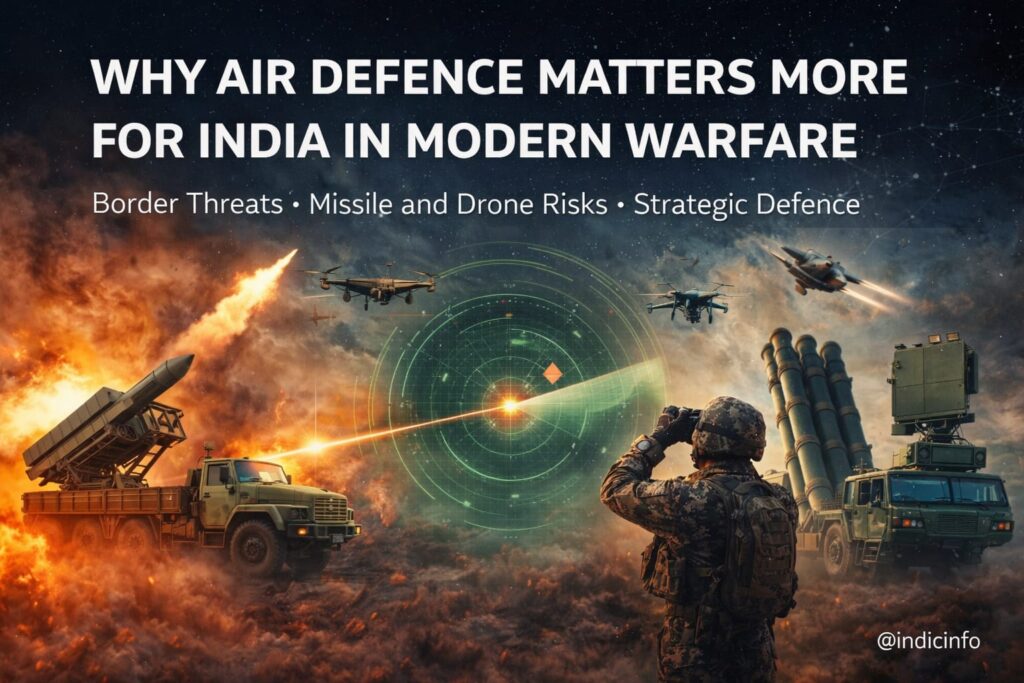
Air defence systems are becoming increasingly important for India as aerial threats evolve rapidly across the region. Modern warfare is no longer limited to traditional aircraft. Missiles, drones, loitering munitions and long-range strike capabilities now create a much wider threat environment.
For India, air defence is no longer just a supporting military layer. It is becoming a central pillar of national security planning because threats can emerge with little warning and at multiple altitudes.
Why Air Defence Matters More Today
The nature of aerial warfare has changed significantly in recent years. Low-cost drones can now enter sensitive zones. Precision-guided missiles can target strategic infrastructure. Even short-duration air intrusions can create major operational pressure.
This means India requires faster detection, quicker interception and layered defensive capability.
Air defence is no longer about protecting only major cities or military bases. It also includes border zones, strategic installations, command centres and critical infrastructure.
The Importance of Layered Defence
Modern air defence works best when multiple systems operate together.
Long-range systems detect and intercept larger threats at distance.
Medium-range systems protect important zones against aircraft and missiles.
Short-range systems respond to drones, helicopters and low-flying targets.
This layered structure improves survivability because a single defensive ring is no longer sufficient in modern conflict.
India’s Expanding Air Defence Focus
India has steadily expanded its air defence architecture through both imported systems and indigenous development.
Advanced radar networks, missile defence batteries and integrated command systems are receiving greater attention because future threats may appear simultaneously across different sectors.
This also explains why air defence discussions now appear more frequently in defence planning than before.
India’s air defence development also reflects long-term work supported by DRDO programmes.
Air Defence and Border Security
Border regions increasingly require stronger air defence coverage because drone movement, surveillance intrusion and fast aerial activity have become more frequent concerns.
Mountain terrain also makes rapid detection difficult. In such areas, air defence systems must combine radar coverage with quick-response capability.
This makes border air defence a strategic requirement rather than only a wartime reserve.
Detection also depends on systems linked to How Electronic Warfare Is Becoming Critical for India.
Why Air Defence Links with Modern Warfare
Air defence no longer operates separately from electronic warfare, surveillance satellites and anti-drone systems.
Detection networks, signal intelligence and battlefield awareness all support successful interception.
This means air defence now sits inside a larger military network rather than functioning as an isolated weapon system.
Air defence systems increasingly work alongside capabilities discussed in Why Anti-Drone Warfare Is Now Essential for India.
Conclusion
Air defence systems are becoming more important for India because future threats will likely arrive faster, lower and in more complex forms.
The ability to detect and neutralise aerial threats early is now essential for national security.
As warfare changes, strong air defence will remain one of the most important defensive pillars for India in the years ahead.