
Geography continues to shape global power, even in an age of advanced technology. Certain narrow passages, known as strategic chokepoints, control the movement of trade, energy and military forces.
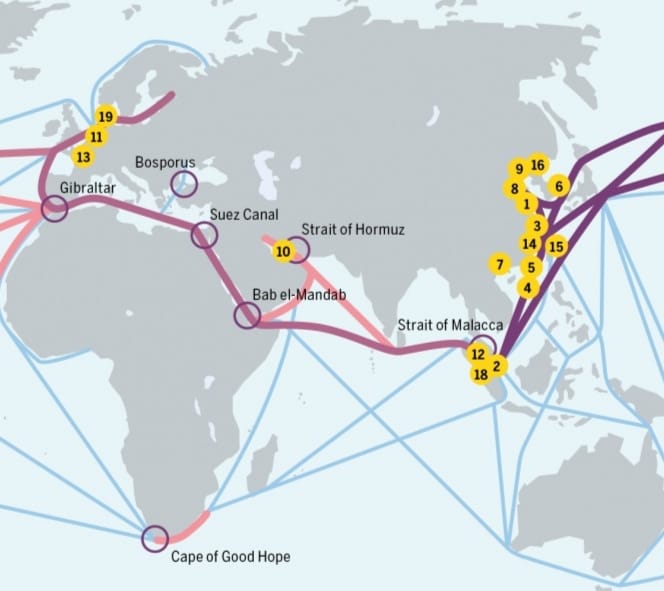
For India, these chokepoints are not distant concepts. They directly influence national security, economic stability and geopolitical strategy.
What Are Strategic Chokepoints?
Strategic chokepoints are narrow geographic passages through which large volumes of trade or military movement pass.
Because of their limited width, they are:
- easy to monitor
- difficult to bypass
- highly sensitive during conflict
Any disruption in these locations can affect entire regions.
Why Chokepoints Matter Globally
Global trade depends heavily on maritime routes and narrow passages.
A large percentage of:
- oil shipments
- container trade
- naval movement
passes through a small number of chokepoints.
This makes them critical not only for individual countries but for the global economy.
Key Chokepoints Relevant to India
- Strait of Malacca
One of the busiest sea lanes in the world, the Strait of Malacca connects the Indian Ocean to the Pacific Ocean.
For India:
- major trade passes through it
- energy imports depend on it
- naval strategy considers it crucial
- Strait of Hormuz
A significant portion of the world’s oil supply passes through this narrow passage.
India’s energy security is directly linked to stability in this region.
- Bab el-Mandeb Strait
This chokepoint connects the Red Sea to the Gulf of Aden.
Disruptions here can affect shipping routes between Europe and Asia.
- Siliguri Corridor
While not maritime, the Siliguri Corridor is one of India’s most important land chokepoints.
It connects mainland India to the northeast and plays a critical role in national integration and defence logistics.
India’s vulnerability becomes clearer when examining the strategic importance of the Siliguri Corridor.
This land chokepoint, often called the Chicken Neck, highlights how geography shapes national security.
Why Geography Still Matters in Modern Warfare
Even with advancements in technology, geography remains decisive.
Reasons include:
- physical routes cannot be replaced instantly
- logistics still depend on terrain and distance
- narrow passages remain vulnerable
This means control over chokepoints can shape outcomes during conflict.
Risks Associated with Chokepoints
Chokepoints carry inherent risks:
- supply disruption
- economic impact
- military vulnerability
Any instability can have ripple effects across multiple sectors.
India’s Strategic Approach
India is increasingly focusing on:
- strengthening maritime presence
- improving infrastructure
- diversifying supply routes
- enhancing regional partnerships
These efforts aim to reduce dependence and improve resilience.
India continues to strengthen its maritime and defence strategy to secure critical trade routes.
Strategic Conclusion
Strategic chokepoints continue to shape global and regional power dynamics.
For India, understanding and securing these critical passages is essential for long-term stability.
Geography may not change, but how a nation responds to it defines its strategic strength.