
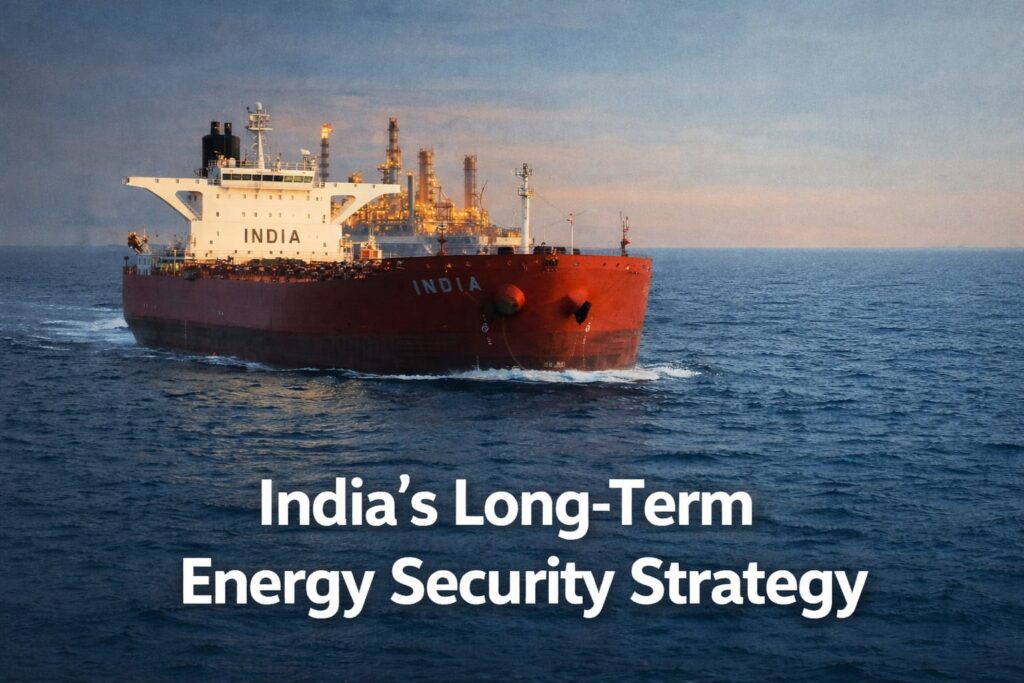
Why Energy Security Has Become a Strategic Priority
Energy security is now one of the most important pillars of India’s long-term strategic planning.
As one of the world’s fastest-growing major economies, India depends heavily on imported crude oil, natural gas and industrial energy inputs to sustain economic growth.
Any disruption in global supply routes can immediately affect inflation, transport costs and industrial output.
Dependence on West Asia and the Need for Diversification
For decades, West Asia has remained India’s primary energy source.
A large share of India’s crude imports comes from Gulf producers because of geographic proximity and established trade relationships.
However, repeated regional crises have shown the risks of overdependence on a single region.
This has pushed India to diversify imports from multiple sources.
Expanding Energy Partnerships
India has significantly expanded energy purchases from Russia, the United States and other producers.
Diversified sourcing reduces vulnerability during geopolitical crises.
It also improves bargaining power in international energy markets.
According to the International Energy Agency, long-term global energy diversification remains critical:
Strategic Petroleum Reserves
India has built strategic petroleum reserves to protect against supply disruptions.
These reserves allow temporary stability during sudden market shocks.
Expanding reserve capacity remains an important long-term objective.
Maritime Security and Energy Routes
Energy security also depends on sea route protection.
Critical oil shipments pass through the Indian Ocean and major chokepoints such as the Strait of Hormuz.
This is why maritime security has become directly linked with national strategy.
Renewable Energy and Long-Term Transition
India is also investing in solar, wind and alternative energy to reduce future dependence on imported fossil fuels.
The long-term objective is to strengthen resilience while reducing exposure to external shocks.
Conclusion
India’s future energy security will depend on three major pillars: diversified imports, strategic reserves and secure maritime routes.
As global instability continues, energy planning is no longer only an economic issue. It has become a central part of national strategy.
Read also: https://indicinfo.in/india-closely-monitoring-west-asia-conflict-as-energy-security-concerns-rise/