
Introduction: A Narrow Waterway With Global Strategic Consequences
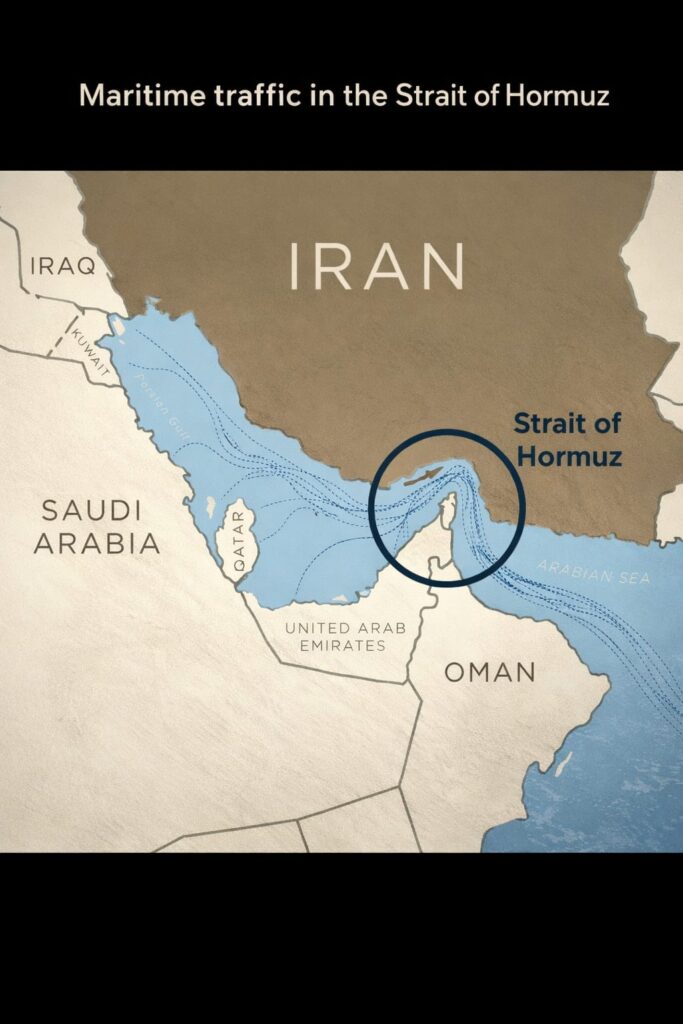
The Strait of Hormuz is one of the most strategically important maritime chokepoints in the world. Though geographically narrow, it carries a disproportionate share of global energy trade, making it central to international stability. Nearly one-fifth of global crude oil and a significant portion of liquefied natural gas pass through this narrow waterway every day, connecting Gulf producers to Asian and global markets.
For India, the strategic importance of the Strait goes far beyond global headlines. A major share of India’s crude oil imports originates in the Gulf region, meaning any disruption in this passage immediately raises questions about energy security, inflation, shipping costs, and strategic planning.
According to the International Energy Agency, a major share of global oil trade passes through the Strait of Hormuz each day.
Why the Strait of Hormuz Matters to India
India imports most of its crude oil requirements, and a substantial portion of those imports comes from Gulf producers such as Saudi Arabia, Iraq, the United Arab Emirates, and Kuwait. Much of this energy traffic passes through the Strait before reaching the Arabian Sea and Indian ports.
India’s wider energy strategy is already shifting beyond West Asia as strategic planners prepare for long-term supply uncertainty.
This means that even a temporary disruption in Hormuz affects India immediately through:
- Higher crude prices
- Increased freight costs
- Insurance risk for tankers
- Pressure on domestic fuel pricing
A Strategic Vulnerability in Times of Conflict
Whenever military tensions rise in West Asia, the Strait becomes one of the first areas watched by global markets. Even without a full blockade, naval confrontation, missile threats, drone attacks, or tanker seizures can trigger major disruptions.
Because the Strait lies close to Iranian territory, any conflict involving Iran immediately creates uncertainty for shipping routes.
For India, this creates a strategic vulnerability: a conflict thousands of kilometres away can rapidly affect domestic energy stability.
Why India Closely Monitors Gulf Maritime Security
India has steadily expanded naval awareness in the Arabian Sea and nearby maritime zones. The Indian Navy increasingly treats sea lane security as part of national strategic planning, not merely commercial logistics.
India’s concern includes:
- Monitoring tanker movement
- Ensuring safe shipping routes
- Protecting Indian commercial interests
- Preparing for emergency energy scenarios
Conclusion
The Strait of Hormuz remains one of the most important external strategic pressure points affecting India. Though outside India’s borders, its impact reaches directly into India’s economy, security planning, and geopolitical calculations.
For India, understanding Hormuz is not optional. It is part of understanding how global geography shapes national security.