
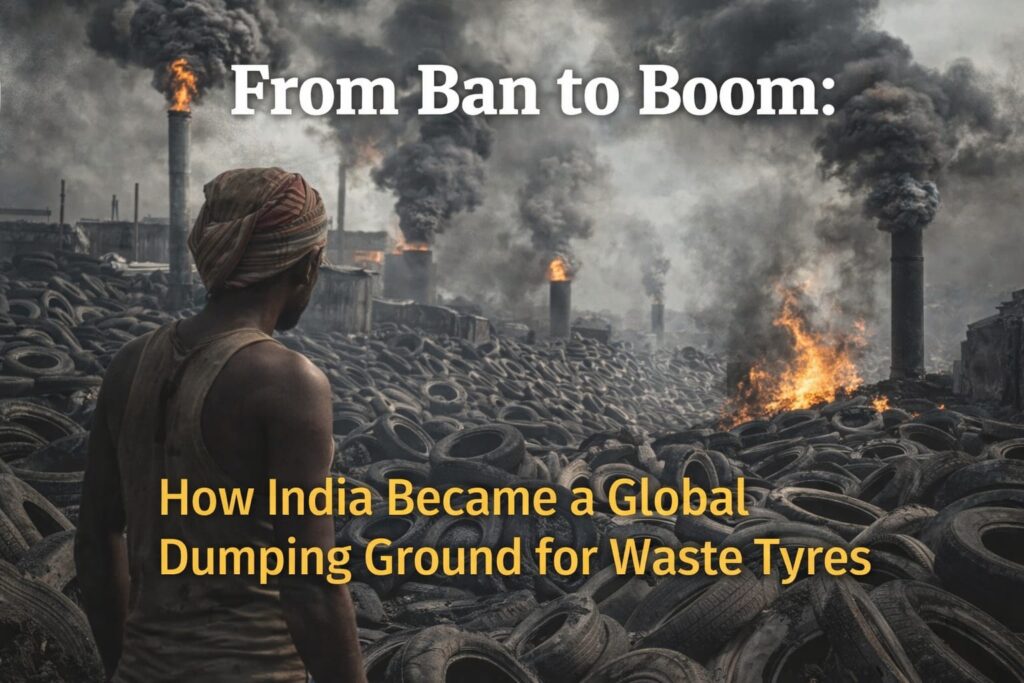
In 2022, India announced restrictions on the import of waste tyres, signalling an intention to curb pollution and unsafe recycling practices. On paper, the move suggested a stronger environmental stance. In reality, however, the opposite unfolded.
Within a few years, India witnessed a sharp surge in waste tyre imports, turning parts of the country into processing hubs for the world’s discarded rubber. From industrial belts in northern India to semi-rural zones near cities, tyre recycling and pyrolysis plants multiplied—many operating with weak oversight.
What was meant to be controlled recycling has increasingly become an environmental and public health concern.
The Numbers: Imports Rose Despite Restrictions
Trade data and investigative reports show that India’s waste tyre imports increased several-fold after 2020, even as regulations tightened.
While the government moved to restrict tyres meant for burning, imports classified for “recycling” continued. This classification gap allowed large volumes of end-of-life tyres from developed economies to enter India legally.
Key points:
- Imports rose sharply after pandemic-era disruptions.
- India emerged as one of the world’s largest destinations for waste tyres.
- Most exporting countries were in Europe, the UK, and parts of East Asia.
The contradiction between policy intent and ground reality lies at the heart of the problem.
How Waste Tyres Are Processed in India
- Regulated Recycling (Limited Scale)
In theory, waste tyres can be recycled safely:
Mechanical shredding
Crumb rubber production
Use in road construction or industrial products
These methods require capital, technology, and compliance. Their share remains limited. - Pyrolysis and Tyre-to-Fuel Plants (Dominant Model)
Most imported tyres end up in pyrolysis units, where tyres are heated in oxygen-limited chambers to extract:
Tyre pyrolysis oil (TPO)
Carbon black
Steel wire
While industrial-grade pyrolysis can be controlled, many Indian units operate with poor emission controls, outdated technology, and minimal monitoring.
Environmental and Health Impact
Air Pollution
Poorly controlled tyre processing releases:
- Polycyclic aromatic hydrocar (PAHs)
- Sulphur compounds
- Fine particulate matter (PM2.5)
- Dioxins and other carcinogens
Communities near these plants frequently report:
- Persistent smoke
- Strong chemical odours
- Breathing difficulties and eye irritation
Water and Soil Contamination
Residues from tyre processing often seep into:
- Groundwater
- Agricultural land
- Nearby water bodies
In several regions, locals report blackened water sources and reduced crop productivity.
Worker Safety
Most plants rely on informal labour:
- Limited protective equipment
- Long exposure to toxic fumes
- No long-term health monitoring
Regulatory Gaps and Weak Enforcement
India does have environmental rules, including:
- Extended Producer Responsibility (EPR)
- CPCB and State PCB monitoring
- Import documentation requirements
However, multiple issues persist:
- Infrequent inspections
- Under-staffed pollution boards
- Plants reopening after temporary shutdowns
- Loopholes in import classification
Several state pollution control boards have already found widespread non-compliance, including missing air filters and unsafe waste disposal.
Who Benefits — and Who Pays the Price
Beneficiaries
- Foreign exporters offloading waste cheaply
- Import intermediaries
- Small and mid-scale pyrolysis operators
Those Who Pay
- Local communities
- Industrial workers
- Farmers near processing zones
- Public health systems
The economic gains remain concentrated, while the environmental costs are socialised.
According to environmental researchers and reporting by platforms such as Mongabay India, unregulated tyre recycling poses serious long-term health and ecological risks
Is Pyrolysis Always Bad?
Not necessarily.
Experts note that high-standard, continuously monitored pyrolysis can reduce harm. However, this requires:
- Advanced scrubbers and filters
- Continuous emissions monitoring
- Strict waste handling protocols
- Transparent audits
The problem in India is not recycling itself—but unregulated and poorly enforced recycling.
What Needs to Change
- Close import loopholes for misclassified waste tyres
- Mandatory emissions monitoring for all tyre processing units
- Limit pyrolysis licences to industrial-grade facilities
- Public disclosure of inspection reports
- Health monitoring for workers and nearby residents
Without these steps, India risks becoming a long-term dumping ground for global industrial waste.
Conclusion: A Policy Test for India
India’s waste tyre crisis is a test of governance, not intent. The country has the laws, institutions, and technical capacity to manage waste responsibly. What remains missing is consistent enforcement and accountability.
If left unchecked, the current trajectory could lock parts of India into decades of environmental damage—long after the economic benefits fade.
The choice is clear: responsible recycling or irreversible harm.
visit indicinfo.in for more.