
India has significantly reduced its financial assistance to Bangladesh, cutting aid by nearly half—from $13 million to $6.5 million—in its latest fiscal allocation. While the figures may appear modest, the decision carries strong diplomatic and strategic signals, reflecting New Delhi’s growing unease over developments in its eastern neighbourhood. According to official budget documents cited by Reuters, India reduced foreign aid allocations for select countries.
Growing Concerns Over Minority Safety
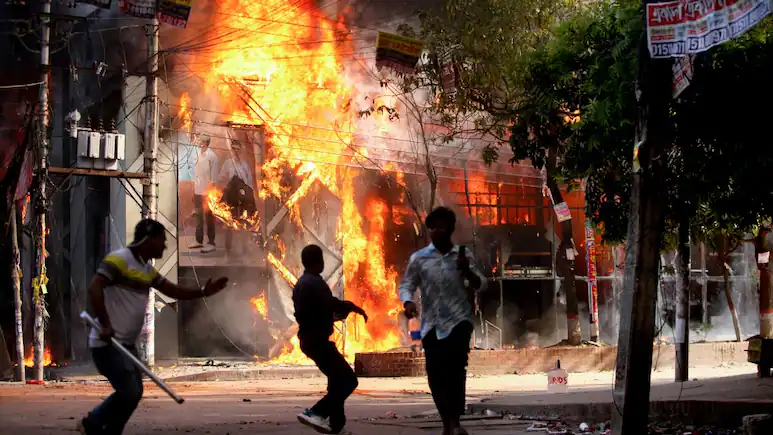
One of the key factors behind the aid reduction is India’s increasing concern over the safety and treatment of minority communities in Bangladesh. Over the past year, more than 2,900 incidents of violence against minorities—including Hindus, Christians, and Buddhists—have been reported. These incidents range from targeted killings and arson attacks to land encroachments and intimidation.
India had allocated $13 million in aid to Bangladesh in the previous fiscal year, but only $3.7 million was ultimately disbursed. This gap between allocation and actual spending points to mounting dissatisfaction within New Delhi over the ground realities, particularly as reports of violence continued despite diplomatic engagement.
Financial Aid as Diplomatic Leverage
The reduction in aid is being viewed as a form of financial signaling rather than an abrupt break in relations. Instead of issuing sharp public statements, India has chosen to convey its concerns through budgetary decisions—using economic tools to underline that internal stability and protection of vulnerable communities matter in bilateral partnerships.
At the same time, India has not reduced its overall regional outreach. Assistance to several neighbouring countries has remained stable or increased, indicating that the Bangladesh decision is country-specific, not part of a broader retreat.
Strengthening Ties with Trusted Neighbours
India continues to invest diplomatically and financially in countries it considers reliable partners in South Asia. Nations such as Bhutan, Nepal, Sri Lanka, and the Maldives are receiving sustained or enhanced support, reinforcing New Delhi’s emphasis on trust, cooperation, and strategic alignment within its immediate neighbourhood.
This approach fits within India’s long-standing Neighbourhood First policy, which prioritises stability and mutually beneficial ties with nearby countries.
A Broader Global South Pivot
Beyond South Asia, India is also recalibrating its foreign assistance strategy. Financial aid to Latin American countries has reportedly doubled to $13 million, signalling a growing focus on the Global South. This move aligns with India’s ambition to emerge as a stronger diplomatic and economic partner across developing regions, diversifying its influence beyond traditional geographic boundaries.
Conclusion
India’s decision to cut aid to Bangladesh is not merely a fiscal adjustment—it is a calculated diplomatic message. By reducing financial assistance, India is emphasizing that strategic partnerships are built not only on geography and history, but also on governance, stability, and the protection of minority rights.
As regional dynamics evolve, this shift underscores how economic tools are increasingly shaping South Asian diplomacy—quietly, but decisively.
For more updates on India’s foreign policy, visit our India & geopolitics section.